For many students, a first job does not start with a desk or an office. It starts with a name tag, a schedule full of weekend shifts, and learning how to work with people. Restaurants and customer service jobs are where many high school students take their first steps into the working world, even if they never think of those experiences as anything more than a way to earn extra money,
Introduction to Hospitality Management takes those familiar after-school jobs and asks students to look at them differently. Now in its second year, the course shows how everyday customer interactions connect to a much larger industry, one that extends far beyond the walls of a restaurant.
At the beginning of the course, students learn the foundations of hotel and food service operations. From there, the class moves into areas many students do not expect to study in high school.
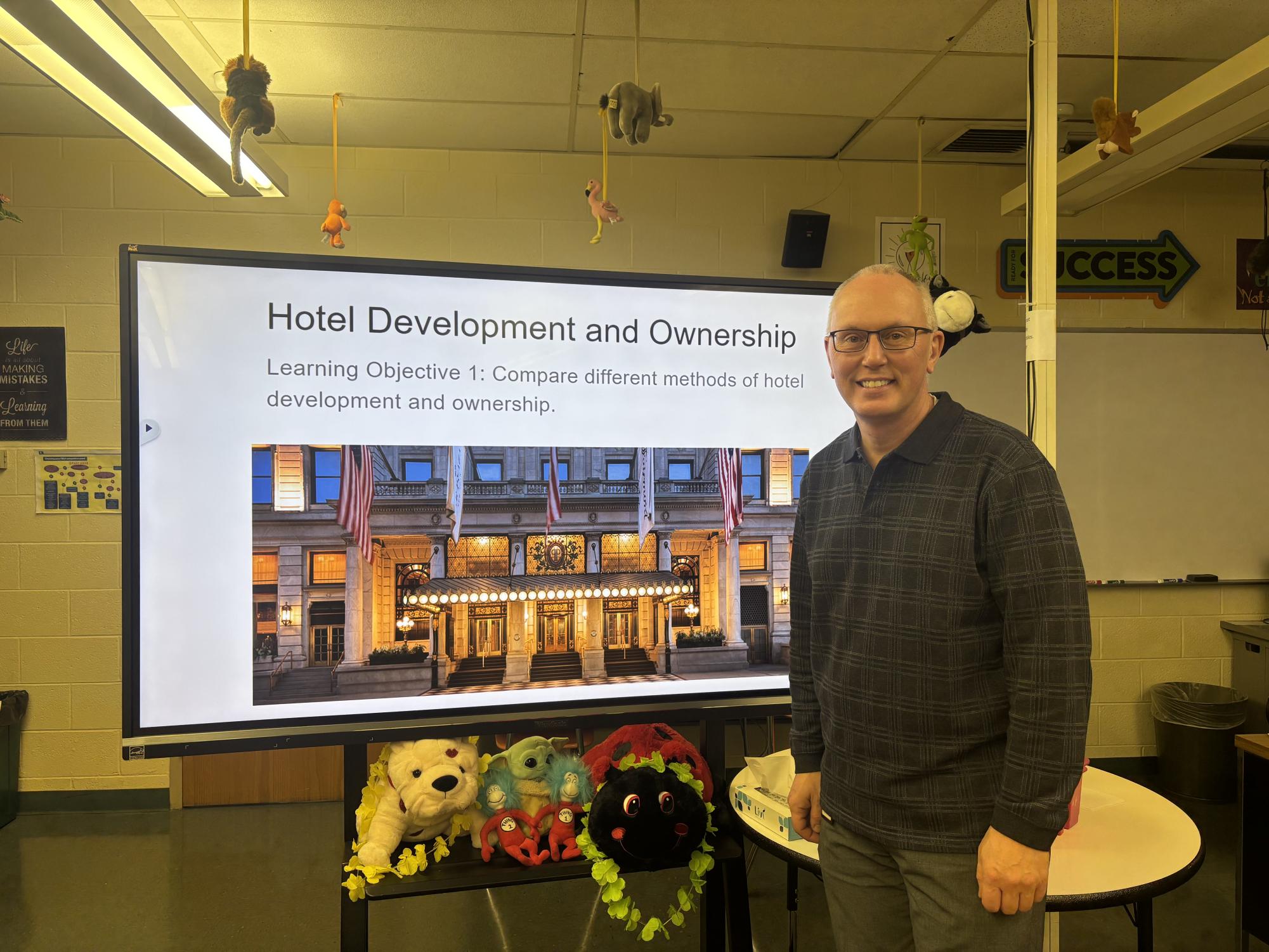
“We do start on those two topics and we spend a good time on those,” Dr. Theodore Trissler, who teaches the course, explained. “But then, we bridge into some of the fun things like theme parks.”
The curriculum also explores national parks, transportation systems, and casinos, highlighting how hospitality shapes travel, entertainment, and tourism.
The course itself grew out of what Dr. Trissler saw as a missing piece in the school’s offerings. Hospitality, he explained, often goes unnoticed as a career path, despite how large the industry truly is.
“11% of worldwide gross domestic product is the hospitality industry. 8% of the jobs worldwide,” Trissler said.
Because of that scale, he believed there was a clear need for a course that introduced students to the field in a more intentional way.
“I knew this wouldn’t be one of those classes where we have like 20 sections and so on. It would be a niche class,” Trissler said. “But I thought there was a void there, and knew we should fill that void.”
Dr. Trissler brings more than a textbook perspective to the classroom. Before teaching, he spent years working in the hotel industry, experience that continues to influence how the course is taught.
“My prior life was spent in the hospitality industry, in the hotel industry specifically,” Trissler said. “Just having that practical experience and still spending time in that business also kind of keeps me current and up to date in terms of what is happening out there.”
For some students, the class becomes more than just another elective. Many enroll without any long term plans in hospitality, sometimes simply because they have space in their schedule. Over time, that curiosity can turn into something more. According to Dr. Trissler, several former students have gone on to find careers in hospitality related programs, discovering paths they had not previously considered.
“It leads into that career path as well,” Trissler said, also noting that local programs make the transition especially accessible. “The course is still new, but we’ve had a few that have gone on to various colleges to major in one aspect of hospitality.”
The course also challenges how students view the jobs they already hold. Many teenagers hold positions in jobs related to hospitality, and don’t picture them as anything more than temporary.
Into to Hospitality encourages students to see those roles as starting points, with opportunities for leadership, management, and growth
Students who enjoy and thrive in the class often share similar qualities.
“You need to be outgoing,” Trissler noted. “When you’re talking about a hotel or a restaurant, it really is an experience for the guest. You need the type of individual that can deliver that experience.”
Dr. Trissler described the class as one that blends practical skills with leadership and service focused learning.
“Hospitality Management focuses on mastering the business, leadership, and service skills that drive hotels, restaurants, and tourism organizations to create exceptional guest experiences.”
For students who already spend their afternoons serving customers or working behind the scenes, Introduction to Hospitality Management offers a chance to see those experiences in a new light. What starts as a part time job might just be the beginning of something bigger.