

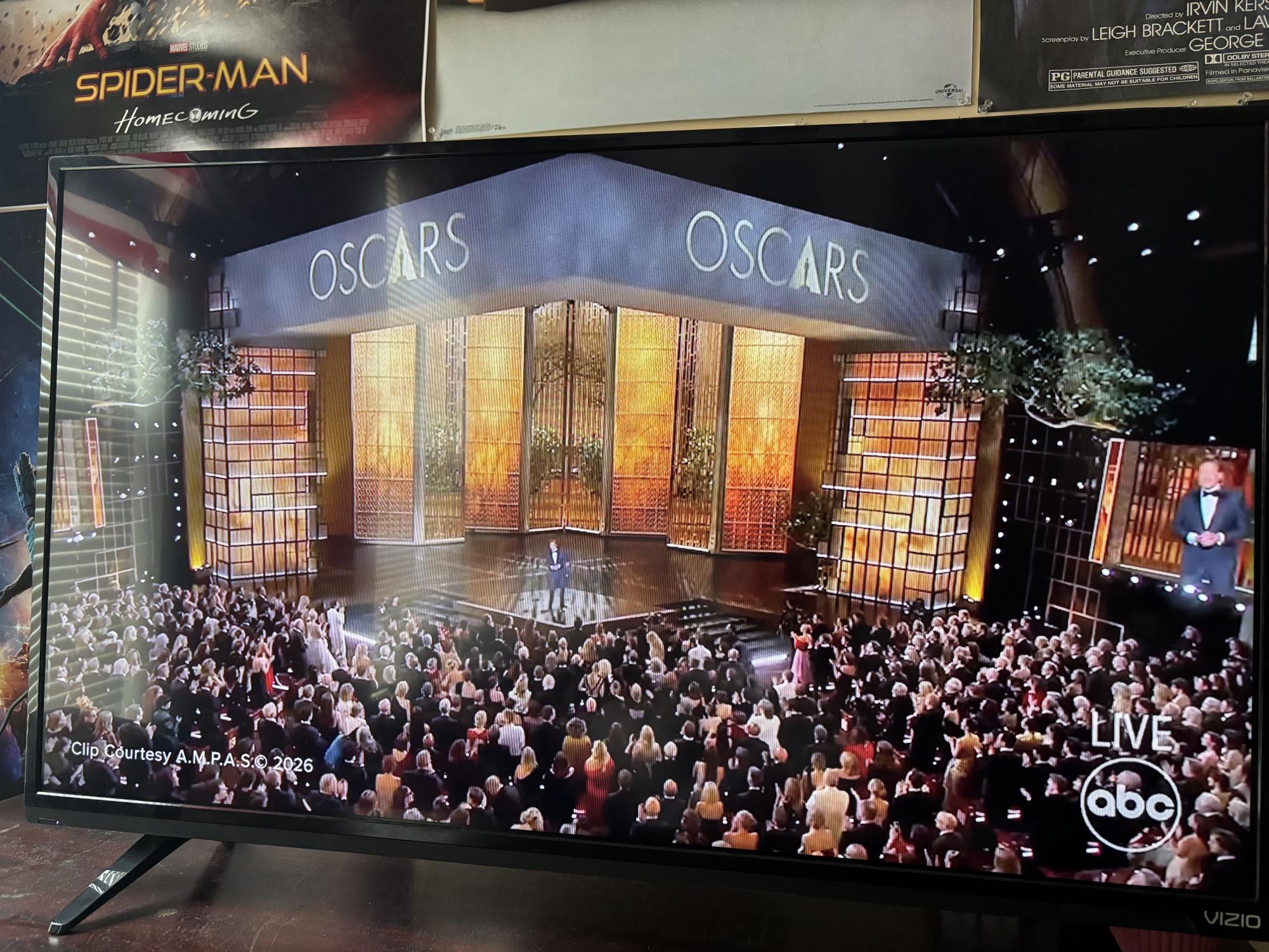
Last night marked the 98th Academy Awards, celebrating the best films of 2025. Hosted by Conan O’Brien, the ceremony reflected a year of film defined by ambitious directors, international storytelling, and a tight race between two major contenders: One Battle After Another and Sinners.
From Ryan Coogler’s genre-bending vampire epic to Paul Thomas Anderson’s sprawling political drama, the nominees represented some of the boldest filmmaking of the year.
Here are some of the biggest wins, surprises, and memorable moments from the night.
Opening Segment
The ceremony opened with host Conan O’Brien humorously revisiting several of the year’s biggest films. The sequence moved quickly between genres and tones, with the elaborate wig and makeup of Gladys from Weapons, to a ping-pong match with Timothee Chalamet in Marty Supreme, and nods to other nominees throughout the night. The montage worked as a reminder of just how stylistically diverse this year’s nominees were, from period dramas to supernatural horror.
Most Wins
The night ultimately belonged to Paul Thomas Anderson.
His film, One Battle After Another, took home six Oscars, including Best Picture and Best Director. The film also won Best Supporting Actor for Sean Penn, Best Adapted Screenplay, Best Film Editing, and the inaugural award for Best Casting.
The wins marked Anderson’s first competitive Oscars after decades of nominations for films such as There Will Be Blood and Phantom Thread, making the sweep feel like both a victory for the film and a long overdue recognition of the director’s career.
Best Casting
One of the most historically notable moments of the night came with the introduction of the Academy Award for Best Casting, a brand new category recognizing the crucial role casting directors play in shaping a film’s performance.
Cassandra Kulukundis became the first recipient of the award for her work on One Battle After Another, highlighting the film’s carefully assembled ensemble cast.
The category had been advocated for by casting directors for years, as their work often determines the chemistry and authenticity of a film’s performance.
Acting Awards
In one of the most celebrated wins of the night, Michael B. Jordan won Best Actor for his dual performance in Sinners, portraying twin brothers in the film’s Southern Gothic vampire narrative.
Jordan became only the sixth Black actor to win the category, marking a significant moment in the history of the awards.
“I stand here because of the people who came before me,” Jordan said. “To be amongst those giants, amongst those greats, amongst my ancestors, amongst my guys, thank you everybody in this room and everybody at home for supporting me over my career.”
Meanwhile, Jessie Buckley won Best Actress for her devastating performance in Hamnet, portraying Shakespeare’s wife Agnes as she navigates grief after losing her son.
Her win comes 4 years after her first Oscar nomination for Best Actress in a Supporting Role, where she fell short to Arianna DeBose.
Buckley’s acceptance speech highlighted the support and respect for other women within the industry. She ended her speech by dedicating the award to “the beautiful chaos of a mother’s heart.”
Supporting actor awards went to Sean Penn (One Battle After Another) and Amy Madigan for Weapons, whose victory marked one of the night’s biggest surprises.
Sinners Takes Four
Although One Battle After Another won the most awards, Sinners remained one of the night’s most defining films.
Directed by Ryan Coogler, the supernatural drama blends Southern Gothic storytelling with vampire mythology, creating one of the year’s most visually striking films. The movie took home four Oscars, including Best Actors for Michael B. Jordan, Best Original Screenplay for Coogler, Best Original Score by Ludwig Goransson, and Best Cinematography for Autumn Durald Arkapaw.
The cinematography win made Arkapaw the first Woman of Color to win the category.
Genre films, particularly horror, have historically struggled at the Academy Awards, making the film’s multiple wins a notable breakthrough.
In Coogler’s speech, he thanked the cast and crew, saying the film was “built by people who believe genre films can still carry powerful stories.”
Host Highlights
Conan O’Brien returned for his second time to host the awards, bringing his signature humor while also acknowledging the global nature of modern film making.
About halfway through the show, he highlighted the diversity represented among the nominees.
“Thirty-one countries across six continents are represented this evening. Every film we salute is the product of thousands of people speaking different languages and working hard to make something of beauty,” O’Brien said. “We celebrate not because we think all is well, but because we work and hope for better in the days ahead.”
Moments like these helped balance the ceremony’s humor with a reflection on the current cultural moment, subtly acknowledging the ongoing conversations in the US about immigration, global collaboration, and the role art plays in responding to political tension.
In Memoriam
One of the most emotional portions of the evening came during the annual In Memoriam segment, honoring filmmakers, actors, writers, and artists who passed away in the past year.
Rachel McAdams delivered a heartfelt tribute to her friend and mentor, Diane Keaton. She ended the speech with a girl scout song that Keaton regularly sang, “Make new friends, but keep the old. One is silver, the other is gold. A circle is round, but has no end. That’s how long I’ll be your friend.”
Singer and actress Barbra Streisand also honored legendary actor Robert Redford. During her speech, she fondly joked about how Redford referred to her as “Babs”, sharing that in the last note she wrote to him, she made sure to sign it, “I love you, too. Babs.”
These moments serve as a reminder that beyond the glamour and competition, the film industry is built on decades of shared creativity, mentorship, and friendship.
Surprises and Snubs
As with any Oscars ceremony, several of the night’s most talked about moments came from the results that didn’t happen.
One of the biggest near-misses of the night involved Timothee Chalamet, whose performance in Marty Supreme had been widely praised throughout awards season. Chalamet’s energetic, physically demanding role as the eccentric table tennis prodigy had made him a strong contender for Best Actor, but the award went elsewhere, leaving his film without any Oscars. Still, Chalamet has become one of the most consistent award contenders of his generation, following performances in films like Call Me By Your Name, Dune, and A Complete Unknown.
Some viewers were also surprised that Hamnet, despite earning Jessie Buckley a Best Actress win and strong praise for its performances and direction, ultimately left the ceremony with only one major award. The film, based on the novel by Maggie O’Farrell, explores the grief that inspired Shakespeare’s later tragedies. Hamnet had been considered a possible contender in several categories, making its relatively quiet night a notable outcome.