

In a country often divided by politics, one issue is beginning to unite Americans from both sides: rising gas prices. As tension and military conflict involving Iran escalate, the cost of gasoline across the United States has climbed sharply, leaving many families feeling the financial pressure regardless of their political views on the war itself. While debates continue over whether the conflict is justified, many Americans can agree over one thing- the price at the pumps hurting their wallets.
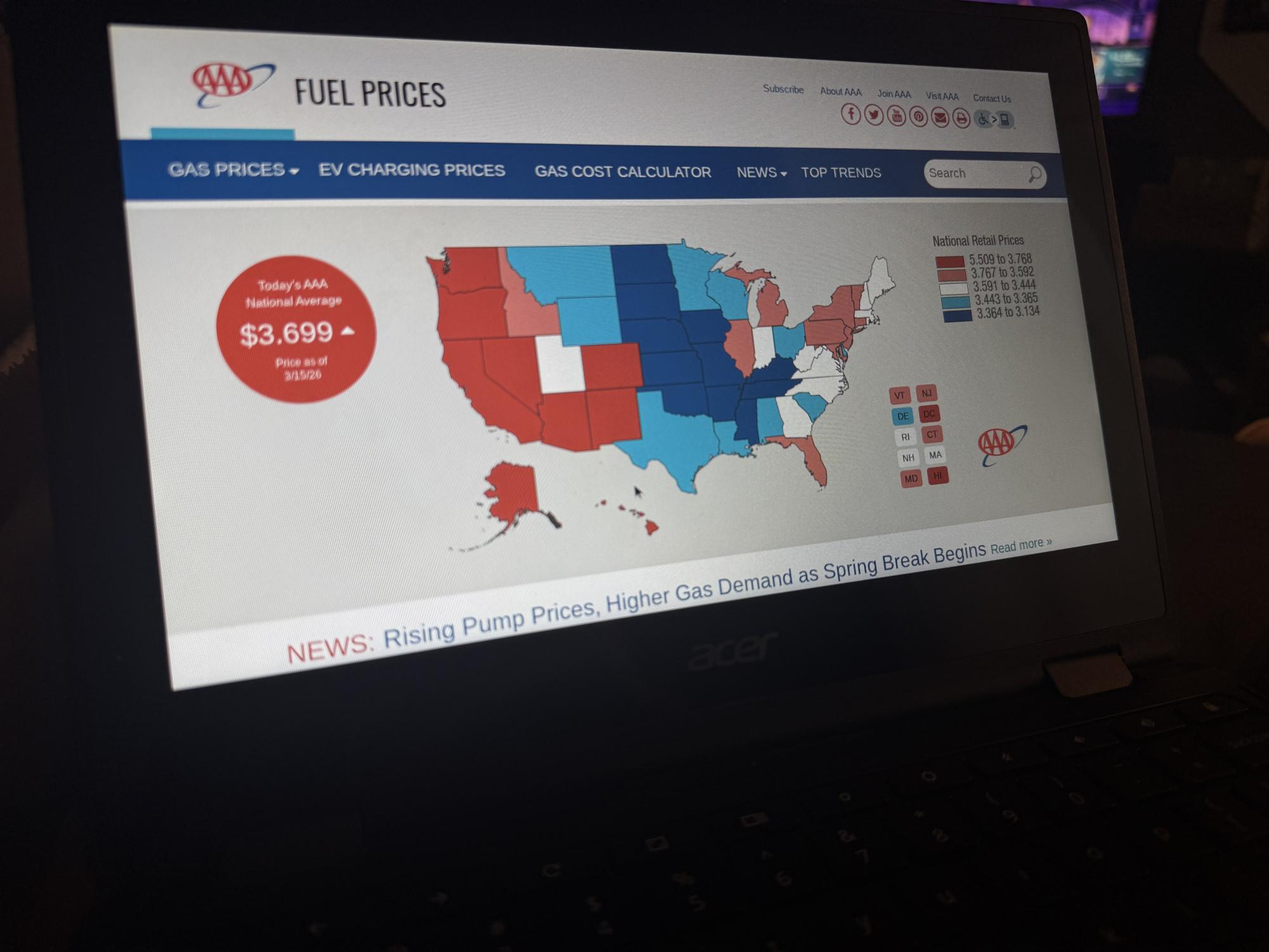
Gas prices have surged across the country since the conflict intensified in late February. According to sites like AAA Fuel Prices and EIA, the average price for gasoline has gone from just under three dollars to around three and a half. Some parts of the country, including California, have already climbed above five dollars. This spike is largely tied to the conflict particularly around the Straight of Hormuz, a critical shipping route for about ⅕ of the worlds oil. The reason Americans feel these changes so quickly is because gas prices are closely tied to crude oil prices which become more expensive or harder to transport due to conflict (Fox Business).
These rising fuel prices can affect much more than just filling up a car. Higher energy costs often lead to increases in other everyday expenses as well. Transportation, delivery, airlines, and farmers which can eventually push up prices for goods and services. Economists warn that this effect could worsen the financial strains for families already dealing with a high cost of living (Time).
Public opinion about the conflict itself remains divided. Some Americans support military action against Iran, while others oppose it. However, polling shows that many people across both parties expect that the raised gas prices will hurt their personal finances. In fact, surveys indicate that a majority of Americans believed the conflict will have a negative impact on their wallets as “nearly seven in 10 Americans — including 44% of Republicans — expect gas prices to keep increasing in the coming months, according to a Reuters-Ipsos poll released Monday.”
According to PBS interviews on different American peoples’ thoughts on gas prices, a 43-year old factory worker in Iowa who voted for Trump in the last election said, “I thought that he was going to bring some of those things back,’ And now? ‘He said he was going to bring gas down, but the war in Iran is now making everything worse.” Another Republican leading man from Florida said, “You’ve just got to fill it up and bite the bullet and hope that the prices go back down — that’s all I can really do, I still have to get from point A to point B, and I need gas to do that.” An Independent from Florida remarked, “I’ve been pretty grateful that the gas prices have been really reasonable” at least until the last week, said Albrecht, 67, who identified as an independent voter.” And a 70 year-old “strong democrat” retired nonprofit executive director said she had to stop at over a half a tank because she’s on a fixed income. Last week, she paid only $30 to top herself off. Despite the obvious fact that all Americans do not entirely agree with these people, this shows that there has been more of a mutual understanding instead of the great division between the two parties.
In a time when political division has dominated our country’s conversations, rising fuel prices serve as a reminder that economic realities affect everyone. Whether Americans support or oppose the war with Iran, most drivers can agree on one thing: watching numbers climb at the gas pump is something no one wants to see.